W. Jud Ready

Jud Ready
jud.ready@gtri.gatech.edu

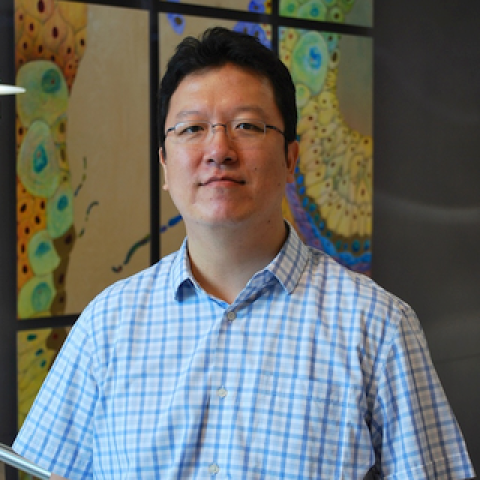
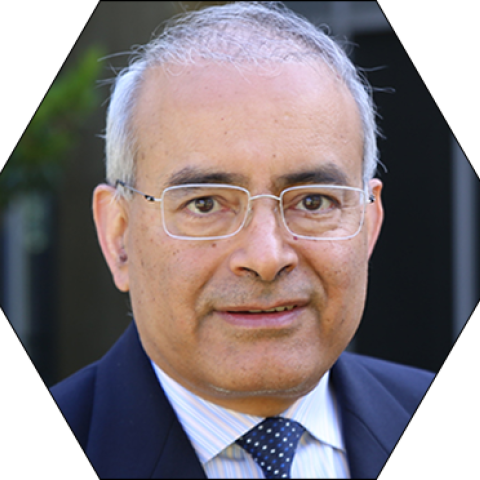
W. Jud Ready is the executive director of the Space Research Institute. Prior to this role, he served as associate director of external engagement for the Georgia Tech Institute for Matter and Systems and director of the Georgia Tech Center for Space Technology and Research. He has also been an adjunct professor in the School of Materials Science and Engineering at Georgia Tech and a principal research engineer on the research faculty of Georgia Tech Research Institute (GTRI) for over a dozen years. Prior to joining the Georgia Tech faculty, he worked for a major military contractor (General Dynamics) as well as in small business (MicroCoating Technologies). He has served as PI or co-PI for grants totaling ~$17M awarded by the Army, Navy, Air Force, DARPA, NASA, NSF, NIST, industry, charitable foundations and the States of Georgia and Florida. His current research focuses primarily on energy, aerospace, nanomaterial applications, and electronics reliability.

Executive Director, Space Research Institute
Principal Research Engineer, Georgia Tech Research Institute
Phone
404.407.6036
Additional Research

Materials Failure and Reliability; Carbon Nanotubes; Integrated photonics; Photovoltaics; Solar

IRI And Role
Energy > Research Community
Space > Faculty
Matter and Systems > Affiliated Faculty
Space > Leadership
Energy
GTRI
Geogia Tech Research Institute > Electro-Optical Systems Laboratory

H. Jerry Qi

H. Jerry Qi's profile picture
qih@me.gatech.edu

H. Jerry Qi is a professor and the Woodruff Faculty Fellow in the George W. Woodruff School of Mechanical Engineering at Georgia Institute of Technology. He received his bachelor degrees (dual degree), master and Ph.D. degree from Tsinghua University (Beijing, China) and a ScD degree from Massachusetts Institute of Technology (Boston, MA, USA). After one year postdoc at MIT, he joined University of Colorado Boulder as an assistant professor in 2004, and was promoted to associate professor with tenure in 2010. He joined Georgia Tech in 2014 as an associate professor with tenure and was promoted to a full professor in 2016. Qi is a recipient of NSF CAREER award (2007). He is a member of Board of Directors for the Society of Engineering Science. In 2015, he was elected to an ASME Fellow. The research in Qi's group is in the general area of soft active materials, with a focus on 1) 3D printing of soft active materials to enable 4D printing methods; and 2) recycling of thermosetting polymers. The material systems include: shape memory polymers, light activated polymers, vitrimers. On 3D printing, they developed a wide spectrum of 3D printing capability, including: multIMaTerial inkjet 3D printing, digit light process (DLP) 3D printing, direct ink write (DIW) 3D printing, and fused deposition modeling (FDM) 3D printing. These printers allow his group to develop new 3D printing materials to meet the different challenging requirements. For thermosetting polymer recycling, his group developed methods that allow 100% recycling carbon fiber reinforced composites and electronic packaging materials. Although his group develops different novel applications, his work also relies on the understanding and modeling of material structure and properties under environmental stimuli, such as temperature, light, etc, and during material processing, such as 3D printing. Constitutive model developments are typically based on the observations from experiments and are then integrated with finite element through user material subroutines so that these models can be used to solve complicated 3D multiphysics problems involving nonlinear mechanics. A notable example is their recent pioneer work on 4D printing, where soft active materials is integrated with 3D printing to enable shape change (or time in shape forming process). Recently, his developed a state-of-the-art hybrid 3D printing station, which allows his group to integrate different polymers and conduct inks into one system. Currently, his group is working on using this printing station for a variety of applications, including printed 3D electronics, printed soft robots, etc.

Professor, Woodruff School of Mechanical Engineering
Woodruff Faculty Fellow, Woodruff School of Mechanical Engineering
Phone
404.385.2457
Office
MRDC 4104
Additional Research

Additive/Advanced Manufacturing; micro and nanomechanics; Recycling; Soft Materials; Conducting Polymers


IRI And Role
Bioengineering and Bioscience > Faculty
Renewable Bioproducts > Affiliated Faculty
Matter and Systems > Affiliated Faculty
Bioengineering and Bioscience
University, College, and School/Department
Georgia Institute of Technology > College of Engineering > Woodruff School of Mechanical Engineering

Mark Prausnitz

Mark Prausnitz's profile picture
mark.prausnitz@chbe.gatech.edu

Professor Mark R. Prausnitz is a Regents' Professor and the Love Family Professor in Chemical and Bimolecular Engineering in the School of Chemical & Bimolecular Engineering. He received his B.S. in 1988 from Stanford University and his Ph.D. in 1994 from the Massachusetts Institute of Technology. Professor Prausnitz and his colleagues carry out research on biophysical methods of drug delivery, which employ microneedles, ultrasound, lasers, electric fields, heat, convective forces and other physical means to control the transport of drugs, proteins, genes and vaccines into and within the body. A major area of focus involves the use of microneedle patches to apply vaccines to the skin in a painless, minimally invasive manner. In collaboration with Emory University, the Centers for Disease Control and Prevention, and other organizations, Professor Prausnitz's group is advancing microneedles from device design and fabrication through pharmaceutical formulation and pre-clinical animal studies through studies in human subjects. In addition to developing a self-administered influenza vaccine using microneedles, Professor Prausnitz is translating microneedle technology especially to make vaccination in developing countries more effective. The Prausnitz group has also developed hollow microneedles for injection into the skin and into the eye in collaboration with Emory University. In the skin, research focuses on insulin administration to human diabetic patients to increase onset of action by targeting insulin delivery to the skin. In the eye, hollow microneedles enable precise targeting of injection to the suprachoroidal space and other intraocular tissues for minimally invasive delivery to treat macular degeneration and other retinal diseases. Professor Prausnitz and colleagues also study novel mechanisms to deliver proteins, DNA and other molecules into cells. Cavitation bubble activity generated by ultrasound and by laser-excitation of carbon nanoparticles breaks open a small section of the cell membrane and thereby enables entry of molecules, which is useful for gene-based therapies and targeted drug delivery. In addition to research activities, Professor Prausnitz teaches an introductory course on engineering calculations, as well as two advanced courses on pharmaceuticals and technical communication, both of which he developed. He also serves the broader scientific and business communities as a frequent consultant, advisory board member and expert witness.

Faces of Research - Profile Article

Regents' Professor, School of Chemical and Bimolecular Engineering
J. Erskine Love Jr. Chair; Chemical and Biomolecular Engineering
Director, Center for Drug Design, Development and Delivery
Phone
404.894.5135
Office
Petit 1312
Additional Research
Micro and Nano Engineering; Nanomedicine; microneedle patches; Microfabrication; nanoparticle drug delivery
IRI And Role
Bioengineering and Bioscience > Faculty
Matter and Systems > Affiliated Faculty
Bioengineering and Bioscience
University, College, and School/Department
Georgia Institute of Technology > College of Engineering > School of Chemical and Biomolecular Engineering

Martin Mourigal

Martin Mourigal's profile picture
mourigal@gatech.edu

Martin Mourigal received the B.S in Materials from Ecole des Mines de Nancy in 2004. He later received his M.S. and Ph.D. in physics from Ecole Polytechnique Federale (EPFL) located in Lausanne, Switzerland in 2007 and 2011, respectively. He was also a postdoctoral research fellow in John Hopkins University from 2011 until 2014. He joined Georgia Tech in 2015 and is currently an assistant professor in the School of Physics. Mourigal's lab focuses on the study of collective electronic and magnetic phenomena in quantum materials. His research exploits the unique strengths of neutron and X-ray scattering to probe the organization and the dynamics of matter at the nanoscale.In addition to his own lab research, Mourigal is the co-director of the Georgia Tech Quantum Alliance, a university wide program that will work towards solving problems in optimization, cryptography, and artificial intelligence. Mourigal was awarded the Cullen Peck Faculty Scholar Award from Georgia Tech in 2019. He was also awarded the National Science Foundation CAREER Award for excellence as a young educator and researcher in 2018.

Professor, School of Physics
Initiative Lead, Georgia Tech Quantum Alliance
Phone
404.385.5669
Office
Howey C202
Additional Research

Quantum Materials, Micro and Nanomechanics, Ferroelectronic Materials, Materials Data Sciences, Electronics

IRI And Role
Data Engineering and Science > Faculty
Energy > Research Community
Matter and Systems > Affiliated Faculty
Data Engineering and Science
Energy
University, College, and School/Department
Georgia Institute of Technology > College of Sciences > School of Physics

Valeria Milam

Valeria Milam's profile picture
valeria.milam@mse.gatech.edu

Valeria Tohver Milam joined the School of Materials Science and Engineering at Georgia Institute of Technology as an assistant professor in July 2004. She received her B.S. in Materials Science and Engineering with Honors from the University of Florida in 1993. After completing her M.S. degree (1997) in MSE at the University of Illinois, Urbana-Champaign, she interned at Sandia National Laboratories. She then completed her doctoral work at UIUC studying the phase behavior, structure and properties of nanoparticle-microsphere suspensions. Experimental results suggested a novel colloidal stabilization mechanism known as nanoparticle “haloing” in which otherwise negligibly charged microspheres become effectively charge-stabilized by their surrounding shell of highly charged nanoparticles.

After finishing her Ph.D. in 2001, her postdoctoral studies at the University of Pennsylvania focused on DNA-mediated colloidal assembly. The degree of specific attraction between DNA-grafted microspheres was found to vary with sequence length, sequence concentration and ionic strength. A variety of structures such as colloidal chains, rings and satellites were formed by varying the particle size ratio and suspension composition.

Associate Professor, School of Materials Science and Engineering
Phone
404.894.2845
Office
MoSE 3100L
Additional Research

Bio-Inspired Materials; Polymers; Nanostructured Materials; Colloids; Drug Delivery

IRI And Role
Bioengineering and Bioscience > Faculty
Matter and Systems > Affiliated Faculty
Bioengineering and Bioscience
University, College, and School/Department
Georgia Institute of Technology > College of Engineering > School of Materials Science Engineering

Matthew McDowell

Matthew McDowell's profile picture
mattmcdowell@gatech.edu

Matthew McDowell joined Georgia Tech in the fall of 2015 as an assistant professor with a joint appointment in the George W. Woodruff School of Mechanical Engineering and the School of Materials Science and Engineering. Prior to this appointment, he was a postdoctoral scholar in the Division of Chemistry and Chemical Engineering at the California Institute of Technology. McDowell received his Ph.D. in 2013 from the Department of Materials Science and Engineering at Stanford University.

McDowell’s research group focuses on understanding how materials for energy and electronic devices change and transform during operation, and how these transformations impact properties. The group uses in situ experimental techniques to probe materials transformations under realistic conditions. The fundamental scientific advances made by the group guide the engineering of materials for breakthrough new devices. Current projects in the group are focused on i) electrode materials for alkali ion batteries, ii) materials for solid-state batteries, iii) interfaces in chalcogenide materials for electronics and catalysis, and iv) new methods for creating nanostructured metals.

Professor, Woodruff School of Mechanical Engineering
Woodruff Faculty Fellow
Director, Georgia Tech Advanced Battery Center
SEI Senior Advisor: Energy Storage
Phone
404.894.8341
Office
MRDC 4408
Additional Research

Batteries; Nanostructured Materials; Composites; Fabrication; Energy Storage; Thermal Systems

IRI And Role
Renewable Bioproducts > Affiliated Faculty
Energy > Initiative Leads
Energy > Hydrogen Group
Energy > Research Community
Matter and Systems > Affiliated Faculty
University, College, and School/Department
Georgia Institute of Technology > College of Engineering > Woodruff School of Mechanical Engineering

Wilbur Lam

Wilbur Lam's profile picture
wilbur.lam@bme.gatech.edu

Dr. Wilbur Lam received his B.A. from Rice University in 1995, his M.D. from the Baylor College of Medicine in 1999 and his Ph.D. from the University of California,San Francisco/University of California, Berkeley Joint Graduate Group in Bioengineering in 2008. He completed his Residency in Pediatrics from UCSF in 2002 and was a Postdoctoral Fellow at UC Berkeley from 2008-2010. Dr. Lam's research involves integrating microtechnology ,development, experimental hematology and oncology and clinical medicine. His interdisciplinary laboratory, comprising clinicians, engineers, and biologists, is dedicated to applying and developing micro/nanotechnologies to study, diagnose, and treat blood disorders, cancer, and childhood diseases. This unique "basement to bench to bedside" approach to biomedical research is enabled by our lab's dual locations at the Emory University School of Medicine and the Georgia Institute of Technology and our affiliations with the Children's Healthcare of Atlanta hospitals.

Professor, Wallace H. Coulter Department of Biomedical Engineering
Pediatric Hematologist/Oncologist, Children’s Healthcare of Atlanta
Professor of Pediatrics, Emory University School of Medicine
Phone
404.385.5081
Office
Marcus 3135
Additional Research

Cellular mechanics of hematologic processes and disease, microfluidics, microfabrication, BioMEMs, point-of-care diagnostics, pediatric medicine, hematology, oncology. Our interdisciplinary laboratory, comprising clinicians, engineers, and biologists, is dedicated to applying and developing micro/nanotechnologies to study, diagnose, and treat blood disorders, cancer, and childhood diseases. This unique "basement to bench to bedside" approach to biomedical research is enabled by our lab's dual locations at the Emory University School of Medicine and the Georgia Institute of Technology and our affiliations with the Children's Healthcare of Atlanta hospitals.

IRI And Role
Bioengineering and Bioscience > Faculty
Matter and Systems > Affiliated Faculty
Bioengineering and Bioscience
University, College, and School/Department
Georgia Institute of Technology > College of Engineering > Coulter Department of Biomedical Engineering

YongTae (Tony) Kim

YongTae (Tony) Kim's profile picture
yongtae.kim@me.gatech.edu

Kim joined the Woodruff School of Mechanical Engineering as an Assistant Professor in July 2013. Prior to his current appointment, he was a Postdoctoral Associate in the David H. Koch Institute for Integrative Cancer Research at MIT, where he developed biomimetic microsystems for probing nanoparticle behaviors in the inflamed endothelium and for synthesizing therapeutic and diagnostic nanomaterials. His doctorate research at CMU focused on closed-loop microfluidic control systems for lab-on-a-chip applications to biochemistry and developmental biology. Prior to his Ph.D., he was a researcher in areas of dynamics, controls, and robotics at R&D Divisions of Hyundai-Kia Motors and Samsung Electronics for six years.

Associate Professor, Woodruff School of Mechanical Engineering
Phone
404.385.1478
Office
Marcus 3134
Additional Research

Multifunctional Materials; Biosensors; Bio-MEMS; Tissue Engineering

IRI And Role
Bioengineering and Bioscience > Faculty
Bioengineering and Bioscience
Matter and Systems > Affiliated Faculty
University, College, and School/Department
Georgia Institute of Technology > College of Engineering > Woodruff School of Mechanical Engineering

Yogendra Joshi

Yogendra Joshi's profile picture
yogendra.joshi@me.gatech.edu

Prior to joining the Georgia Tech faculty in 2001 as a Professor, Yogendra Joshi held academic positions at the University of Maryland, College Park, and the Naval Postgraduate School, Monterey, California. He also worked in the semiconductor assembly industry on process thermal model development. He was named to the McKenney/Shiver Chair in 2004.

John M. McKenney and Warren D. Shiver Distinguished Chair, George W. Woodruff School of Mechanical Engineering
Professor, George W. Woodruff School of Mechanical Engineering and School of Electrical and Computer Engineering
Phone
404.385.2810
Office
Love 338
Additional Research

Thermal SystemsSystem Design & Optimization

IRI And Role
Energy > Research Community
Matter and Systems > Affiliated Faculty
Energy
University, College, and School/Department
Georgia Institute of Technology > College of Engineering > Woodruff School of Mechanical Engineering

Zhigang Jiang

Zhigang Jiang's profile picture
zhigang.jiang@physics.gatech.edu

Zhigang Jiang received his B.S. in physics in 1999 from Beijing University and his Ph.D. in 2005 from Northwestern University. He was also a postdoctoral research associate at Columbia University jointly with Princeton University and NHMFL from 2005 till 2008. Jiang is interested in the quantum transport and infrared optical properties of low dimensional condensed matter systems. The current ongoing projects include: (1) infrared spectroscopy study of graphene and topological insulators, (2) spin transport in graphene devices, and (3) Andreev reflection spectroscopy of candidate topological superconductors.

Professor, School of Physics
Initiative Lead, Georgia Tech Quantum Alliance
Phone
404.385.3906
Office
Boggs B-18
Additional Research

quantum materials; nanoelectronics; Graphene; Epitaxial Growth

IRI And Role
Energy > Research Community
Matter and Systems > Affiliated Faculty
Energy
University, College, and School/Department
Georgia Institute of Technology > College of Sciences > School of Physics
Subscribe to Affiliated Faculty